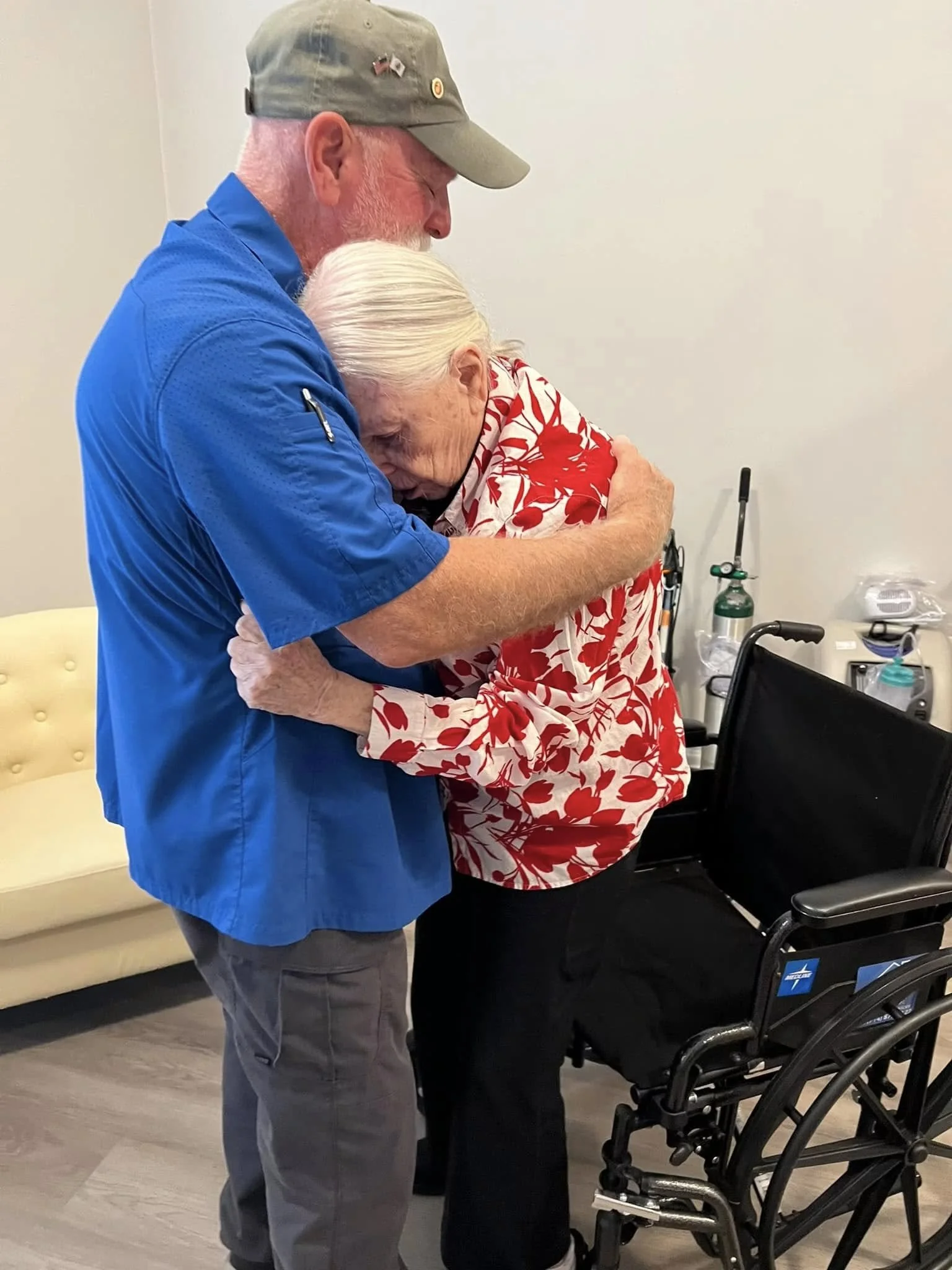
My brother, Dr. Mark E. Freeman, said his goodbyes to our mother on May 23, 2024 — she lived another eight months in rapid decline.
I’m beginning a year of writing about my mother’s Alzheimer’s journey, what caregiving asked of our family, and the support California caregivers should be able to find. #Alzheimers #FamilyCaregiving #DementiaCare
For about ten years, my mother and I lived with Alzheimer’s. For two and a half of those years, I was her primary caregiver. She died in January 2025. The care ended, but the questions it left with me did not.
Caregiving was made of ordinary tasks repeated with extraordinary care. I fed my mother, bathed and dressed her, and trimmed her hair and nails. I also read to her, played music, sang, danced with her, and held her hand. Those were parts of the same relationship.
There was confusion and fear. There were difficult behaviors. I loved my mother deeply, and I also felt the strain of caring for her. Both things are true. I want to say that plainly because caregivers often feel pressure to describe the experience as either a beautiful act of love or an unrelenting burden. My experience held both tenderness and exhaustion.
Over the next year, I’ll write about the work families rarely see, the decisions that can bring grief, and the ways people can stay connected when memory changes. I’ll also look at California resources that may help caregivers find respite, guidance, and in-home support.
I’m not offering one path that every family should follow. I’m sharing what happened to us and what I hope other families can find sooner: clear information, practical support, and care that protects an older person’s dignity while recognizing the caregiver as a person, too.
If you are caring for someone now, you do not have to make every part of the story sound easy in order for your love to be real.
Visit the Contra Costa County Advisory Council on Aging
https://ehsd.org/aging-and-adult-services/advisory-council-on-aging/